







Varicocele Treatment in Delhi: Diagnosis, Microsurgery, Cost & Fertility
A complete patient guide to varicocele symptoms, grades, Doppler evaluation, male infertility, treatment without surgery, microsurgical repair, embolization, cost and recovery.

Find the information you need
These detailed pages cover the most common questions patients ask before choosing observation, microsurgery or embolization.
What is a varicocele and how is it diagnosed?
A varicocele is enlargement of veins around the testicle caused by abnormal venous reflux. It is most commonly found on the left, but it can be bilateral or, less commonly, right-sided.
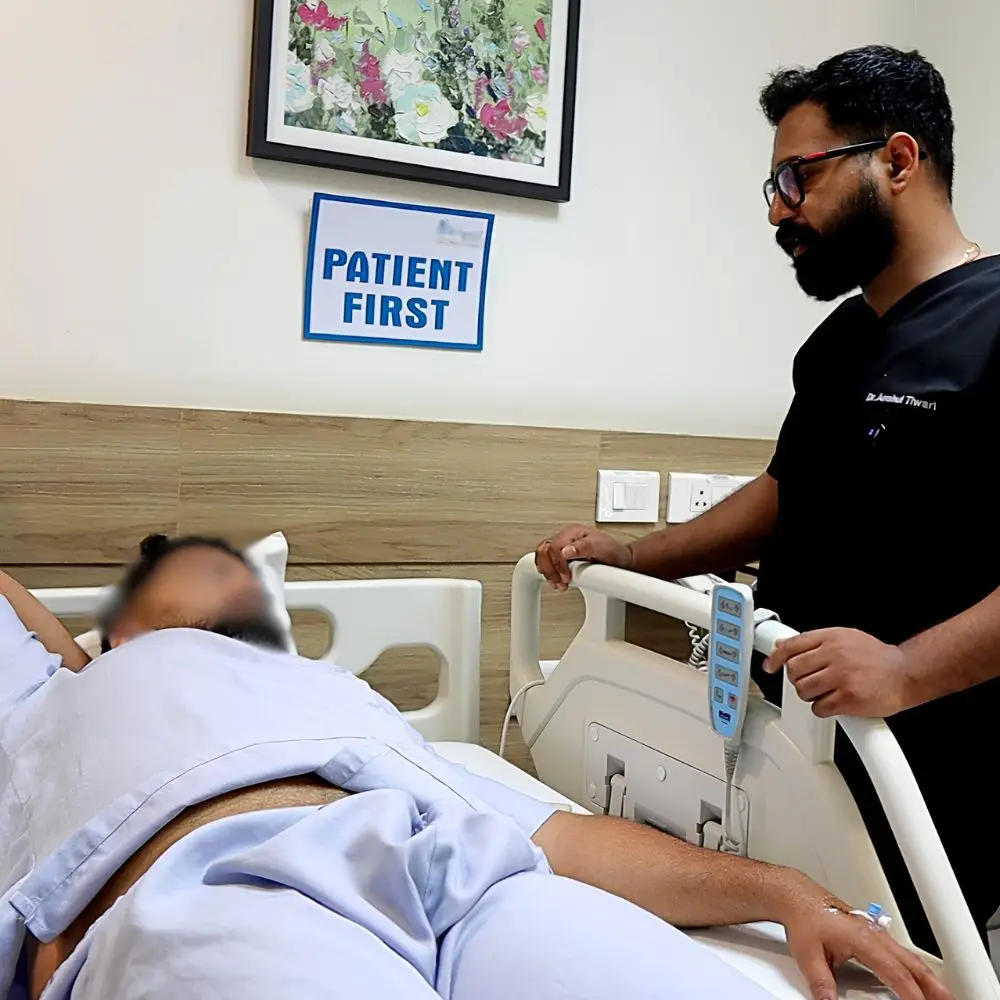
When does varicocele need treatment?
Not every varicocele needs an operation. Treatment is considered when the clinical problem is meaningful and the expected benefit justifies intervention.
Persistent typical pain
Dragging ache or heaviness that fits a varicocele pattern and continues despite sensible conservative measures deserves reassessment.
Infertility + abnormal semen
A palpable clinical varicocele with infertility and abnormal semen parameters is a recognized setting in which repair may be considered.
Testicular impact
Reduced testicular size, progression or other objective findings can change the balance from observation toward active treatment.
Persistent or recurrent varicocele
Previous surgery or embolization changes anatomy. Recurrence should be confirmed and the prior treatment details reviewed before planning a redo procedure.

Can varicocele be managed without surgery?
Yes, selected men can be observed when symptoms are mild and fertility or testicular findings are reassuring. Conservative care is best described as symptom management and monitoring — not a guaranteed anatomical cure.
Observation, microsurgery or embolization?
The treatment method should match the patient's anatomy, symptoms, fertility goals, previous procedures and personal priorities.
Appropriate for many mild or asymptomatic cases when there is no important fertility, pain or testicular concern.
Best for: selected low-impact casesSee non-surgical care →Microscope-assisted repair allows direct identification of abnormal veins with deliberate preservation of important structures.
Best for: selected clinical varicocele requiring repairSee microsurgery details →A minimally invasive radiological procedure performed through vascular access using fluoroscopy and an embolic material to block refluxing veins.
Best for: selected anatomy and patient preferenceCompare both options →Varicocele microsurgery with precise, structure-preserving technique
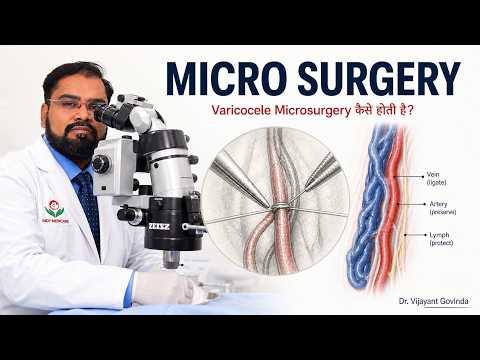
Microsurgical repair is widely used because magnification helps the surgeon distinguish veins from the testicular artery, lymphatics and other spermatic-cord structures. For selected complex or recurrent cases, additional strategies may be discussed after reviewing previous treatment and venous anatomy.
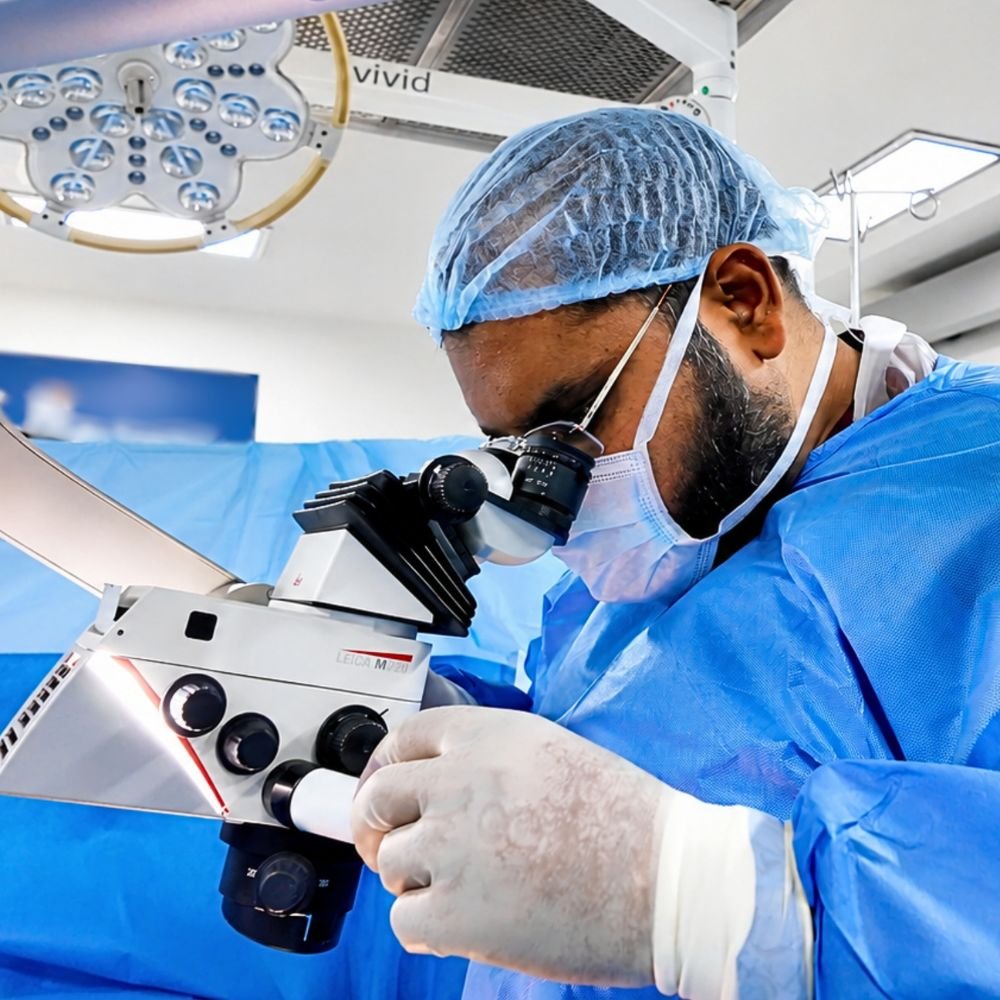
Understand the practical differences before choosing treatment
Both approaches can be appropriate. The comparison should focus on how the procedure is performed, what it requires, and how well it fits your clinical situation.
| Point | Microsurgical Varicocelectomy | Varicocele Embolization |
|---|---|---|
| Approach | Small surgical access with direct visualization under magnification. | Catheter-based vascular access performed by interventional radiology. |
| Radiation | No fluoroscopic radiation is required for the surgical repair itself. | Uses fluoroscopic X-ray guidance during catheter navigation. |
| What closes the reflux | Abnormal veins are identified and ligated. | Target veins are occluded using coils, glue, sclerosant or another embolic material. |
| Anatomy | Direct inspection of spermatic-cord structures. | Technical completion depends on venous access and anatomy. |
| Recovery | Incision and activity recovery are staged according to healing. | Usually no conventional surgical incision, but the vascular access site still needs recovery. |
| Best decision | Depends on fertility goals, pain, anatomy, prior treatment, recurrence history and informed patient preference. | |
Low sperm count, motility problems and fertility planning
A varicocele can be associated with abnormal semen parameters in some men, but the treatment decision should be made in the context of the couple — not from the Doppler report alone.

Varicocele surgery cost in Delhi
At New Delhi Andrology Clinic, the microsurgery package is fixed for one-side and bilateral repair. The doctor confirms whether one side or both sides require treatment before surgery is scheduled.
Watch varicocele video guides
Doctor-led videos on diagnosis, conservative care, fertility, treatment choices and recurrence.




Plan recovery around healing, not only discharge time
Same-day or short-stay care does not mean the body is ready for immediate heavy activity. Return to work, exercise and sexual activity should be staged.
Dr. Vijayant Govinda Gupta
Urologist & Andrologist at New Delhi Andrology Clinic, with a practice focused on men's health, infertility assessment and microsurgical treatment planning.
Clinic-based evaluation
Physical examination, Doppler context, semen analysis and treatment history are reviewed together rather than treating the scan alone.
Procedure selection
Observation, microsurgery, embolization or complex-case planning should be discussed according to the actual indication and anatomy.
Cost clarity
One-side and bilateral microsurgery package prices are stated clearly, with separate guidance for tests, hospital requirements and insurance.
Follow-up planning
Recovery, wound review, activity progression and fertility follow-up are planned according to the patient's clinical goal.
Varicocele Treatment FAQs
Quick answers with the exact related doctor-video chapter for each question.
The best varicocele treatment depends on symptoms, physical examination, Doppler findings, fertility goals, semen analysis and any previous treatment. Mild cases may be observed, while selected patients may benefit from repair.

Some mild or asymptomatic varicoceles can be managed with observation and symptom-relief measures. Medicines, exercise and support garments may help symptoms but do not reliably close refluxing varicocele veins. Read the non-surgical treatment guide.
No. Clinical grade alone should not decide treatment. Persistent typical pain, infertility with abnormal semen parameters, testicular impact and previous treatment history are more important considerations. See the complete grades guide.
A clinical varicocele can be associated with impaired semen parameters in some men. Fertility evaluation should consider semen analysis, examination, the female partner's reproductive factors and the couple's overall plan. Read the fertility guide.
Microsurgical varicocelectomy is a repair performed under magnification to identify and ligate abnormal veins while preserving the testicular artery and lymphatic channels when feasible.
At New Delhi Andrology, COMET refers to a selected-case combined treatment planning approach considered for certain complex, recurrent or bilateral varicocele cases after review of anatomy and previous treatment.

Both are established treatment approaches for selected patients. Microsurgery offers direct visualization of the spermatic cord, while embolization uses catheter-based venous access. The choice depends on anatomy, fertility goals, recurrence history and specialist assessment. Compare both procedures in detail.
At New Delhi Andrology Clinic, the fixed microsurgery package is ₹40,000 for one-side repair and ₹50,000 for bilateral repair. Separate tests or hospital-specific requirements may vary by case. See the full cost guide.

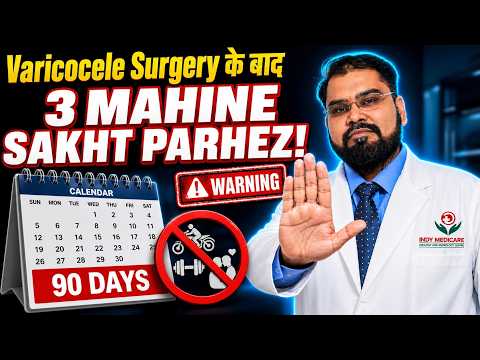
Recovery is staged. Walking and routine daily activity usually return before heavy lifting, gym work or strenuous exercise. The exact timeline depends on healing, one-side or bilateral repair and the treating surgeon's advice.
Yes. Patients can share their Doppler ultrasound, semen analysis and previous treatment records before planning a visit so the clinic can advise what additional evaluation may be useful.
Not sure whether your varicocele needs treatment?
Send your Doppler report, semen analysis and previous treatment records. The next step should be based on the clinical indication — not only on the grade written on a scan.