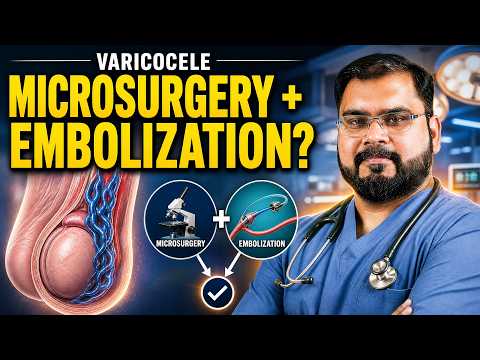
Varicocele Microsurgery vs Embolization | What Marketing Doesn't Tell You
Evidence-Based Treatment Comparison

Varicocele Microsurgery vs Embolization

Microsurgery remains the surgical benchmark. Embolization is a valid minimally invasive option — but phrases such as “no cut, no pain, zero downtime and no recurrence” can hide important details about vascular access, radiation, implanted materials, technical failure and recurrence.

Direct Microsurgical Repair Catheter-Based Embolization Fertility & Recurrence Compared
Varicocele microsurgery vs embolization comparison image
The Short Version

Two Treatments. Very Different Ways of Fixing a Varicocele.

Embolization can be effective in selected patients. Microsurgery, however, has the longer surgical evidence base and allows the surgeon to see and treat the abnormal veins directly while preserving the artery and lymphatics.

Microsurgical Varicocelectomy
The Surgical Gold Standard / Benchmark

Direct visualization under magnification allows precise ligation of abnormal veins with deliberate preservation of the testicular artery and lymphatic channels. It remains strongly positioned in male-infertility care and has a long evidence base.

Direct repair • No fluoroscopy • No intravascular coils/glue
Varicocele Embolization
Useful Minimally Invasive Option — Not “Nothing”

A vein is punctured, a sheath and catheter are introduced, contrast and X-ray fluoroscopy are used, and the gonadal vein is intentionally occluded with coils, glue, sclerosant or another embolic agent. Recovery may be faster, but it is not risk-free or recurrence-proof.

Catheter-based • Anatomy-dependent • Embolic material used
Head-to-Head

Microsurgery vs Embolization

A practical comparison of what actually happens — not just how each treatment is marketed.

PointMicrosurgeryEmbolization
How treatment is doneDirect repair. Abnormal spermatic veins are identified and ligated under magnification.Catheter is advanced through the venous system and the gonadal vein is occluded using embolic materials.
Target visualizationDirect surgical visualization of veins, testicular artery and lymphatics.Depends on venography, catheter access and the patient's venous anatomy.
RadiationNo fluoroscopic radiation is required for the repair.Uses X-ray fluoroscopy and contrast to navigate and confirm venous occlusion.
Implanted embolic materialDoes not require intravascular embolization coils, glue or sclerosant.May use permanent coils, glue, sclerosants, plugs or combinations depending on technique.
Technical limitationDirect access means the repair is not dependent on successful catheterization of the gonadal vein.Technical failure can occur when the target vein cannot be safely catheterized because of anatomy, valves, tortuosity or spasm.
Recurrence / persistenceMicrosurgical series generally report the lowest recurrence among surgical approaches.Persistence or recurrence is documented even after technically successful procedures, including through collateral pathways.
Fertility evidenceStrong surgical evidence base and guideline positioning in appropriately selected infertile men.Can improve semen parameters in selected men, but comparative fertility evidence does not establish universal superiority over microsurgery.
Early recoveryRequires healing of a small surgical incision and temporary activity restrictions.Often faster early recovery, but the vascular access site must still seal and heavy activity may be temporarily restricted.
What Marketing Leaves Out

6 Embolization Claims Worth Looking At More Closely

The issue is not that embolization is “bad.” The issue is when a real vascular intervention is advertised as if almost nothing happens to the body.

01
Marketing claim

“No Cut. Completely Non-Surgical.”

There is no conventional surgical incision, but a blood vessel is still punctured. A guidewire, vascular sheath and catheter are introduced through the vein before treatment is delivered.

Better wording: no conventional surgical incision — not “nothing is punctured.”
02
Marketing claim

“Painless. Zero Downtime.”

Rapid recovery is common, but access-site healing, temporary pain or swelling and post-embolization discomfort are documented. Light desk work is not the same as immediate gym, running or heavy lifting.

Faster recovery can be true. “No recovery” is a different claim.
03
Marketing claim

“95–100% Success.”

Technical success means the target vein was catheterized and embolization was completed. It does not automatically mean pain is cured, sperm is normalized, pregnancy occurs, visible veins vanish or recurrence is impossible.

Technical success ≠ permanent clinical cure.
04
Marketing claim

“No Recurrence.”

Interventional-radiology literature itself recognizes persistence and recurrence. Collateral veins, recanalization and anatomy can allow reflux to persist or return despite an apparently successful procedure.

Recurrence may be uncommon in expert hands — it is not impossible.
05
Marketing claim

“The Coils Don't Matter.”

Coils are permanent intravascular implants. Most remain uneventfully in place, but rare migration and persistent pain requiring further treatment have been documented in the literature.

“Usually well tolerated” is not the same as “nothing is left behind.”
06
Marketing claim

“Fertility Is Restored.”

Embolization can improve semen parameters in selected men, but no treatment can guarantee normal sperm count, motility, DNA fragmentation or pregnancy. Direct comparative evidence does not prove embolization is superior to microsurgery for every fertility patient.

A fertility endpoint is biological — not just technical.
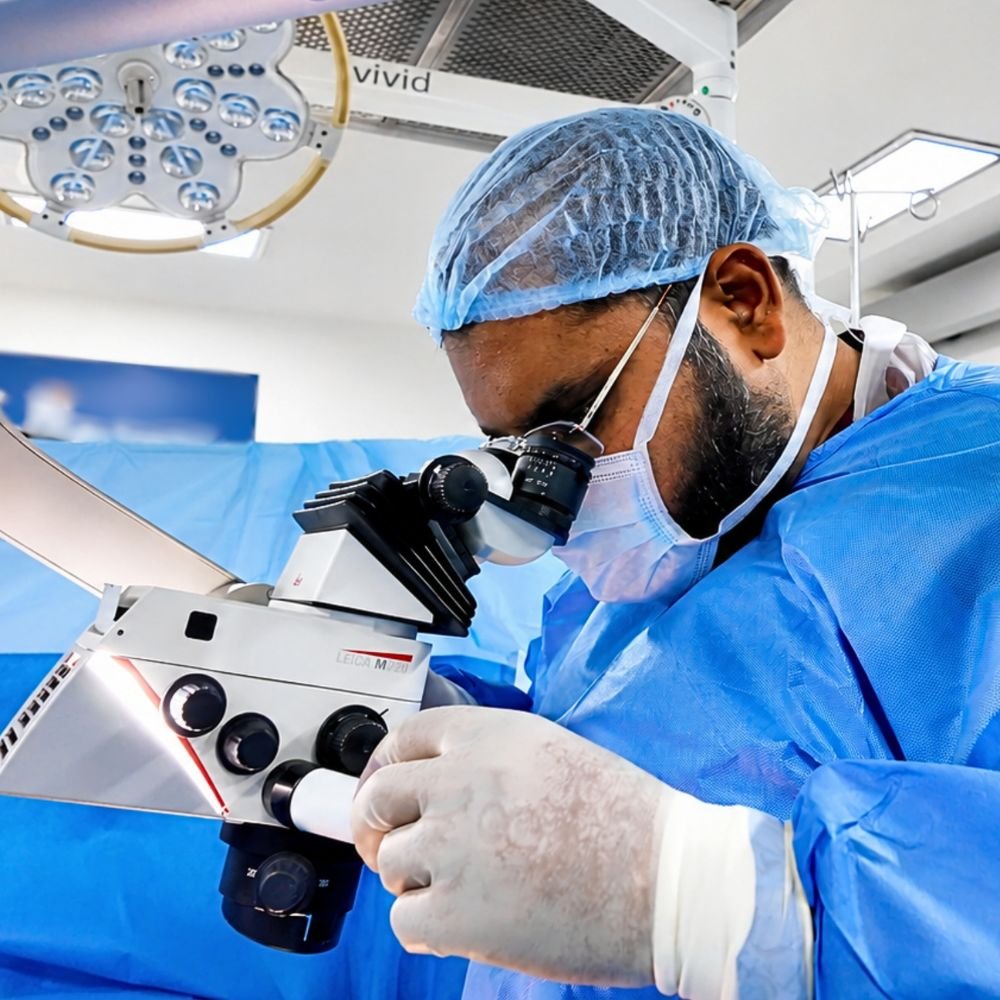
Microsurgical varicocele repair image
Why Microsurgery Remains the Benchmark

The Gold-Standard Surgical Principle Is Simple: See the Anatomy and Repair It Directly.

Microsurgical varicocelectomy has a longer evidence base and gives the surgeon direct control over the structures that matter most: abnormal veins, the testicular artery and lymphatic channels.

1
Direct visualizationThe spermatic cord is examined under magnification so abnormal venous channels can be identified directly rather than reached through a catheter route.
2
Artery & lymphatic preservationMicrosurgical technique is designed to preserve the testicular artery and lymphatics while ligating the abnormal veins.
3
No fluoroscopic radiationThe microsurgical repair itself does not require catheter fluoroscopy or X-ray navigation.
4
Strong fertility positioningSurgical varicocelectomy remains strongly positioned in male-infertility guidance for appropriately selected men with clinical varicocele and abnormal semen parameters.
Their Own Literature Says It

What Interventional Radiology Itself Acknowledges

The strongest criticism of oversimplified marketing is that interventional-radiology sources themselves discuss the same limitations.

Recovery Restrictions

Rapid recovery is common, but activity restrictions and several days of possible discomfort are still acknowledged.

CIRSE patient information

Technical Failure

Success depends on venous anatomy, access, valves, tortuosity and whether the target gonadal vein can be catheterized.

Interventional radiology reviews

Recurrence & Persistence

Even technically successful embolization can be followed by persistent or recurrent varicocele through collateral or recurrent pathways.

CIRSE / modern IR series

Device & Vascular Risks

Coil migration, venous perforation, thrombosis, bleeding and temporary pain are documented complications — not necessarily common, but real.

Peer-reviewed IR literature
Doctor Video Guide

Watch the Comparison

Doctor-led videos explaining the difference between catheter embolization, microsurgical repair and combined approaches.

Varicocele microsurgery vs embolization
Varicocele Microsurgery vs Embolization
Embolization vs microsurgery Hindi comparison
Embolization vs Microsurgery — Hindi Comparison
COMET procedure for varicocele
COMET Procedure for Selected Varicocele Cases
Top Patient Questions

Microsurgery vs Embolization FAQs

10 recurring questions patients ask in our video comments — with concise answers and the exact related video timestamp.

For patients asking which is better for varicocele — microsurgery or embolization — microsurgical varicocelectomy remains the surgical gold-standard benchmark, particularly when fertility, direct visualization of the spermatic cord, artery preservation and lymphatic preservation are priorities. Embolization is a valid minimally invasive option, but it uses catheter-based vascular access and its result depends on venous anatomy and successful catheterization. The final choice should still match the patient’s symptoms, Doppler findings, fertility goals and previous treatment history.

Yes, varicocele can return after embolization. Recurrence or persistence can happen when collateral veins remain open, reflux returns through another pathway, the treated vein recanalizes or the anatomy prevents complete treatment. This is why a technically successful embolization on the procedure day does not mean recurrence is impossible later. Recurrent varicocele is one of the repeated concerns seen in patient comments, especially after previous embolization or older surgery.

If embolization fails, microsurgery can still be considered in many patients. Microsurgical repair allows direct identification and ligation of abnormal veins and can be especially relevant when there is persistent reflux, recurrence, missed collateral veins or ongoing symptoms after a previous procedure. A redo case needs individual review because prior embolization, previous surgery and scar tissue can change the anatomy. Doppler findings and previous treatment records should be reviewed before planning another intervention.

When coils are used for varicocele embolization, the coils are intended to stay permanently inside the treated vein. Most patients tolerate embolization coils without a problem, but coil migration and persistent pain have been documented as uncommon complications. Coil removal is not a routine step and, if it is ever required, it can involve a separate invasive procedure. Patients should therefore know whether coils, glue, sclerosant or another embolic material will be used before treatment.

Yes, varicocele embolization uses fluoroscopic X-ray guidance to navigate the catheter through the venous system and position the embolic material. Microsurgical varicocelectomy does not require fluoroscopic radiation for the repair itself. Radiation exposure during embolization is controlled by the interventional-radiology team, but it is still a real procedural difference that patients comparing microsurgery and embolization should understand.

For varicocele infertility and low sperm count, microsurgical varicocelectomy is the surgical gold-standard approach used for appropriately selected men with a clinical varicocele and abnormal semen parameters. The purpose is to repair abnormal venous drainage while preserving the testicular artery and lymphatics. Improvement in sperm count, motility or pregnancy is never guaranteed, so semen analysis, the female partner’s fertility factors and the couple’s overall reproductive plan should be considered before treatment.

Varicocele embolization is not guaranteed to be painless or to have zero downtime. Many patients recover quickly, but vascular access still has to heal and temporary groin or neck discomfort, scrotal pain, swelling or inflammatory symptoms can occur. Light daily activity may resume relatively early, while heavy lifting, gym activity and strenuous exercise can require temporary restriction. A faster recovery than surgery should not be described as no recovery at all.

How soon you can return to work or gym after varicocele treatment depends on the procedure and the intensity of activity. Desk work and normal walking are different from running, squats, deadlifts or heavy lifting. After microsurgery, return to daily work is usually staged according to wound healing and the surgeon’s assessment; after embolization, the vascular access site also needs time to seal and recover. Follow the treating doctor’s activity plan rather than using same-day discharge as permission for immediate heavy exercise.

A 95% technical success claim in embolization usually refers to successfully reaching the target vein and completing the intended catheter-based occlusion. Technical success does not automatically mean the patient’s pain is cured, semen parameters become normal, pregnancy occurs, the enlarged veins disappear immediately or the varicocele can never recur. Patients comparing success rates should ask whether the number being quoted is technical success, clinical improvement, recurrence-free follow-up or fertility outcome.

The cost difference between varicocele microsurgery and embolization depends on the centre, hospital and materials used. At New Delhi Andrology Clinic, the fixed microsurgery package is ₹40,000 for one-side repair and ₹50,000 for bilateral repair. Embolization pricing can vary with the angiography suite, catheters, guidewires, contrast, coils, glue or sclerosant and other disposable materials. The fairest comparison is the complete package cost, including the possibility of additional treatment if the first procedure does not solve the problem.

Treatment Decision

Choose the Treatment After Understanding What Actually Happens.

Share your Doppler ultrasound, symptoms and semen analysis if fertility is a concern. We can review whether your case is suitable for observation, microsurgical repair or another treatment pathway.

+91-95929 99184
Scroll to Top